Monday, December 27, 2010

Archers & Casters & Horses....Oh My!

It was the day after Christmas and I was expecting a crowd and parking challenges...but not at the Lower Arroyo Seco Nature Park in Pasadena!
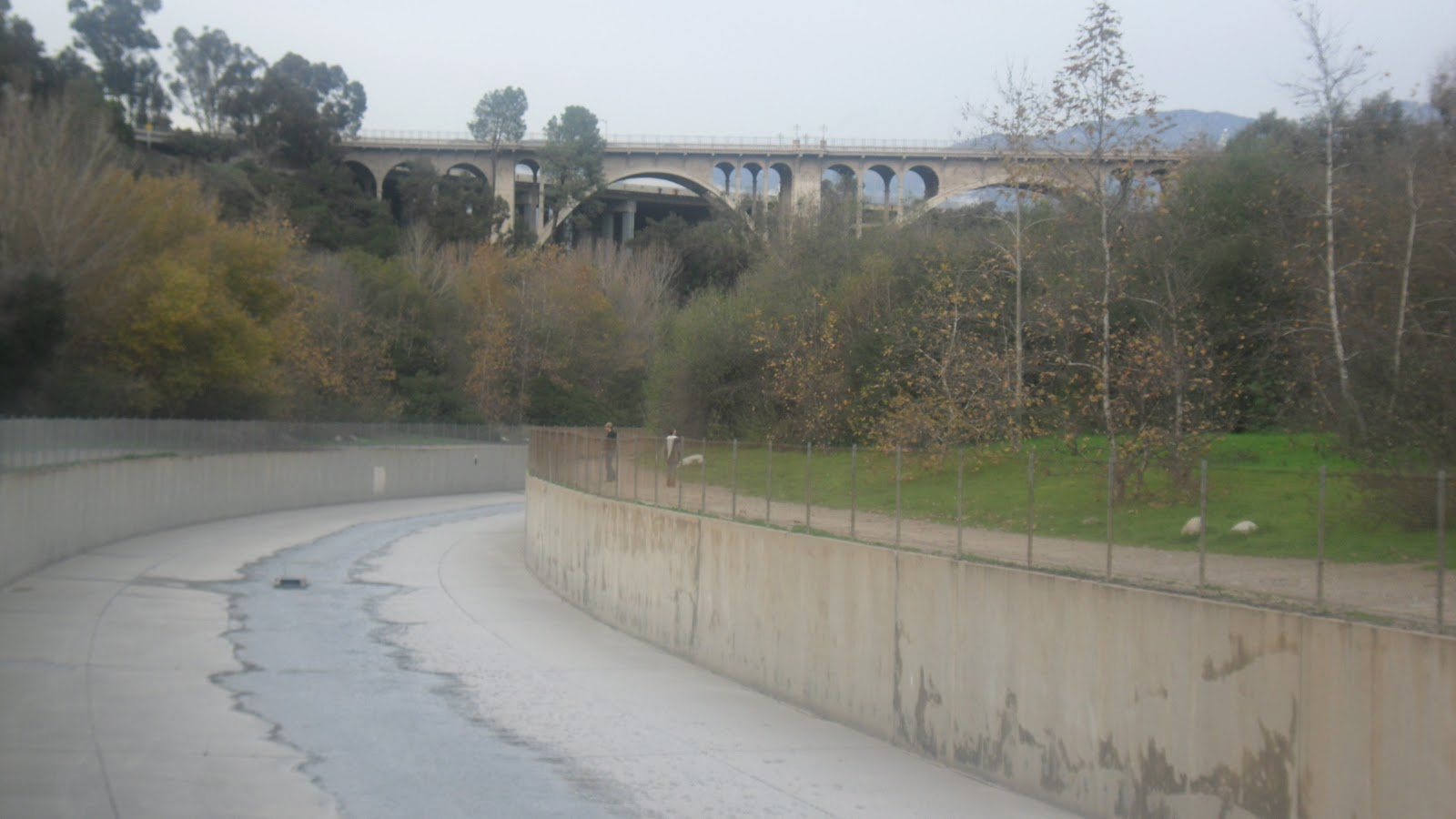
Maybe it was the week of rain; maybe it was the desire to walk off Christmas dinner; maybe it was the Rose Bowl/Parade visitors; regardless, the Lower Arroyo was so busy with walkers, dogs, fly fishermen and equestrians that it was almost impossible to find parking in the park's lot!


Though this bucolic spot is a favorite with joggers and dog walkers, the Lower Arroyo, as we fondly call it, is also the home to some of Pasadena's oldest outdoor recreation groups.


First, there are the Pasadena Roving Archers (PRA), "dedicated to the art of the bow and arrow in the Lower Arroyo Seco since 1935." Men, women, young adults and children are all members of this long-standing non-profit group. All are bound together by the sport of archery, or the bow and arrow, my dad would call it. PRA is home to beginners, weekend enthusiasts, regional, state and international archers.

Did you know archery in the Arroyo Seco has a long history with organized competition starting in the early nineteen thirties? The Pasadena Roving Archers has been a part of that history and is charged with operating and maintaining the Lower Arroyo's archery range.

PRA members provide hundreds of hours of volunteer service to maintain these facilities and provide archery instruction to archers from 8 to 80. All of the PRA archery instructors have been certified by the National Archery Association. Archery classes with the PRA are a good way to learn the sport and this club is always looking for new enthusiastic members. Check them out at http://www.rovingarchers.com/.

Another terrific group that has been calling the Lower Arroyo home since 1947 is the Pasadena Casting Club, where current and future fly fishermen can practice the scientific art of angling and casting. This Club, a charter member of the Federation of Fly Fishers, also supports fish, habitat and natural resource conservation. The park's large casting pond is the ideal spot for fishermen young and old to take casting lessons or just hang around and tell fish tales at the PCC Clubhouse. You can find out how to join this club at  www.pasadenacastingclub.org.

Curious how the Arroyo Seco would look and act if it was not covered in concrete? Look no further than the Lower Arroyo because, thanks to the City of Pasadena and BFI, a naturalized diversion of the stream wends its way through the area, reminding visitors of both the river's past and its hopeful future to once again flow free.

It appears that the Lower Arroyo is no longer a Pasadena Best-Kept Secret but that shouldn't stop you and your family from coming down for a little river fun in the city.

Thursday, December 23, 2010

A River Lover's 12 Days of Christmas

As the traditional 12 days of Christmas arrive, here's my wish for the 12 things we could all do to love our rivers:


1. We will start each day by asking, 'where' is the water' and 'how do I protect it?'

2. We will re-connect with nature and enjoy the powerful joy of being present in the outdoors.

3. We will learn about and employ a watershed approach to resource management, including changing our approach to land use and real estate development to integrate healthy rivers into our urban designs.

4. We will stop tossing our trash out our car windows, onto our sidewalks, and among our nature trails because we know that everything that touches the ground ends up in our rivers and oceans.

5. We will honor our natural water systems by supporting a healthy habitat first, followed by reliable safety and flood control systems.

6. We will help injured animals and people in distress, coming from love, not ego, whenever we see them in pain or danger.

7. We will wonder at the birds that fly, the fish that swim, the animals that forage, and the peace that is known along a bucolic riverway, whether an urban, suburban, or rural stream.

8. We will be grateful for the safe. clean drinking water we have while we work to conserve water and improve secure potable water delivery in harmony with natural cycles.

9. We will revitalize our neighborhoods using 'green' principles that will protect our earth, water and sky.

10. We will practice individual and collective stewardship, to always leave our rivers, seashores, and wildlands in better condition than how we found them.

11. We will teach our children and grandchildren how to play in nature and be self-reliant, so they will know how to protect our rivers when we are gone.

12.  We will remember that our bodies are comprised mostly of water and as such, we are the river.  We will come to understand that restoring our rivers is also healing our own personal health.

Tuesday, December 21, 2010

Lake Hahamongna Appears in Pasadena

 If you were a casual observer, you might think that the above photo features a bucolic lake in the Midwest or South.
When the camera pulls back, though, it's evident that Lake Hahamongna is right here in Pasadena just above Devil's Gate Dam, where the Arroyo Seco flows through the Hahaongna Watershed Park, one of the last intact allevial fans in urbanized Southern California. (That's NASA/Jet Propulsion Laboratory in the far distance.)

The recent Los Angeles area rainstorms have dropped about 9 inches of rain in this foothills area, as of noon on December 21st, with another major storm entering the region tonight. Even though the flow of the Arroyo Seco is clearer than after last year's rains, this shot just above the Dam shows significant sediment build-up, possibly a result of last year's Station Fire.

By my estimation, Lake Hahamongna appears to be about two to four feet deep. The red buoys in the photos are to hold back debris flows from the Upper Arroyo Seco Canyon.  If you look closely, you'll see branch and log debris in addition to the sediment above the buoys.

This beautiful lake is reminiscent of the Arroyo Seco and the Los Angeles River in days of yore when both riverways ran free - a place where earth, water, vegetation, and animals lived in harmony among our Native Americans fishing for trout while floating along their waters in canoes. And as we all know, the Arroyo Seco is one of the main tributaries of the Los Angeles River, where fish movement once reached over 50 miles from the mountains to the sea.

Does this look like the place where soccer fields should be?

Monday, December 20, 2010

Even the Ducks Won't Get in the LA River

It was time to get out and survey the Arroyo Seco and LA Rivers today and check on water flows caused by our current heavy rainstorms.

To no surprise, both riverways were flowing heavily without obstruction and I did not note any obvious debris flows coming down the Arroyo Seco from the Station Fire burn areas.

As usual, it was interesting to note how the flow of the Arroyo Seco increases as it moves into the Northeast Los Angeles neighborhoods, mostly due to small stream and tributary flow from the North Branch in Highland Park at Sycamore Grove Park.

While I'm thrilled to see our local rivers actually filled with water, I'm sad that only 11% of this water will be captured by groundwater percolation, meaning that the rest will rush through the concrete channels to the ocean. 


On a happier note, the  LA City Council's approval of the Low Impact Development (LID) Ordinance this past week is a step in the right direction towards improving groundwater percolation and decreasing storm water run off into our riverways. As the photo above taken at Eads Avenue and the Los Angeles River attests, stormwater running along our streets ultimately finds its way, along with lots of trash and toxins, into our rivers.

While I'm still awaiting LA County Flood Control data, anecdotally, it's safe to say that when the ducks won't get into the LA River, the flow is pretty strong. This should be a guide for humans who are talking, tweeting and blogging about how they're going to kayak or coast down the LA River in this rain. I hope they'll take a clue from the ducks and stay safe.


Saturday, December 18, 2010

The Station Fire, One Year Later: Post-Fire Habitat Restoration & Recovery Symposium

It's hard to believe that more than a year has passed since the devastating Station Fire in the Angeles National Forest and adjacent lands destroyed more than 160,000 acres of watershed.

This past week, the Los Angeles & San Gabriel Rivers Watershed Council and the US Forest Service hosted a one-day symposium at Descanso Gardens that looked in-depth at both the challenges of the fire's aftermath and the encouraging signs of rehabilitation and restoration.

More than 200 professionals crowded into Van de Camp Hall to hear from a number of experts and stakesholders, including Jody Noiron, US Forest Service Supervisor for Angeles National Forest at the time of the Station Fire, and Dr. Sabrina Drill of the University of California Cooperative Extension, who opened the program with an overview of the fire area and its impact.

The morning program, with presentations by Katie VinZant of the US Forest Service and CJ Fotheringham of the US Geological Survey, focused on post-fire invasive species control and the role of the built environment in wildland interface zones on impacted burn areas.

A number of presentations focused on the impact of the Station Fire upon vegetation, aquatic species and ecological succession after fire incidents.  Especially fascinating was US Geologist Survey ecologist Adam Backlin's presentation on how post-fire toxins in waterways affected fish and amphibians. The Arroyo Chub was a strong survivor but the Trout did not fare as well. The video of debris flows included in his presentation was breathtaking.

Long time California Native Plant Society board members, Cliff and Gabi McLean, shared an interesting photo presentation during lunch on how ecological succession occurs in post-fire recovery among native plants in a chaparral wildlands environment. Especially interesting was the role of annuals as the first indicators of vegetative life after a high intensity fire, which in this case reached temperatures about 7000 degrees (not a typo).

From a policy perspective, LA County Department of Public Works Dan Sharp outlined how the County plans to move forward with a new Flood Control District Sediment Management Strategic Plan to address all sediment issues, but particularly those created by the millions of cubic yards of sediment that have flowed down the Big Tujunga and Arroyo Seco into debris basins and other surface water capture areas.  Dan's comments were of particular interest to this writer since LA County is planning to move ahead to remove over 1.2 million cubic yards of sediment from Pasadena's Hahamongna Watershed Park alone. (See my related blogs on the Hahamongna.)

Andy Lipkis of TreePeople gave the audience hope for the future, speaking of the tremendous partnerships with the US Forest Service that will facilitate tree planting in Angeles National Forest as the long-term recovery continues.

All speakers participated in an audience Q&A panel discussion, with a focus on how recovery could lead to more sustainable practices and fire safe landscapes.

Dr. Nancy L. C. Steele, Executive Director of the Los Angeles & San Gabriel Rivers Watershed Council, reminded participants that the full scope of the symposium program will be the single-issue focus of LASGRWC's Spring 2011 edition of WatershedWise Magazine.