Showing posts with label City of Pasadena. Show all posts

Friday, August 5, 2011

Riding Along the Arroyo Seco on the Back of a Horse

Once in awhile, serendipity creates a great adventure.

Such was the case last week when I spotted a friend bathing one of his horses on a weekday afternoon. Surprisingly, we both had finished with work early that day and before I knew it, he said, "Let's go riding!"

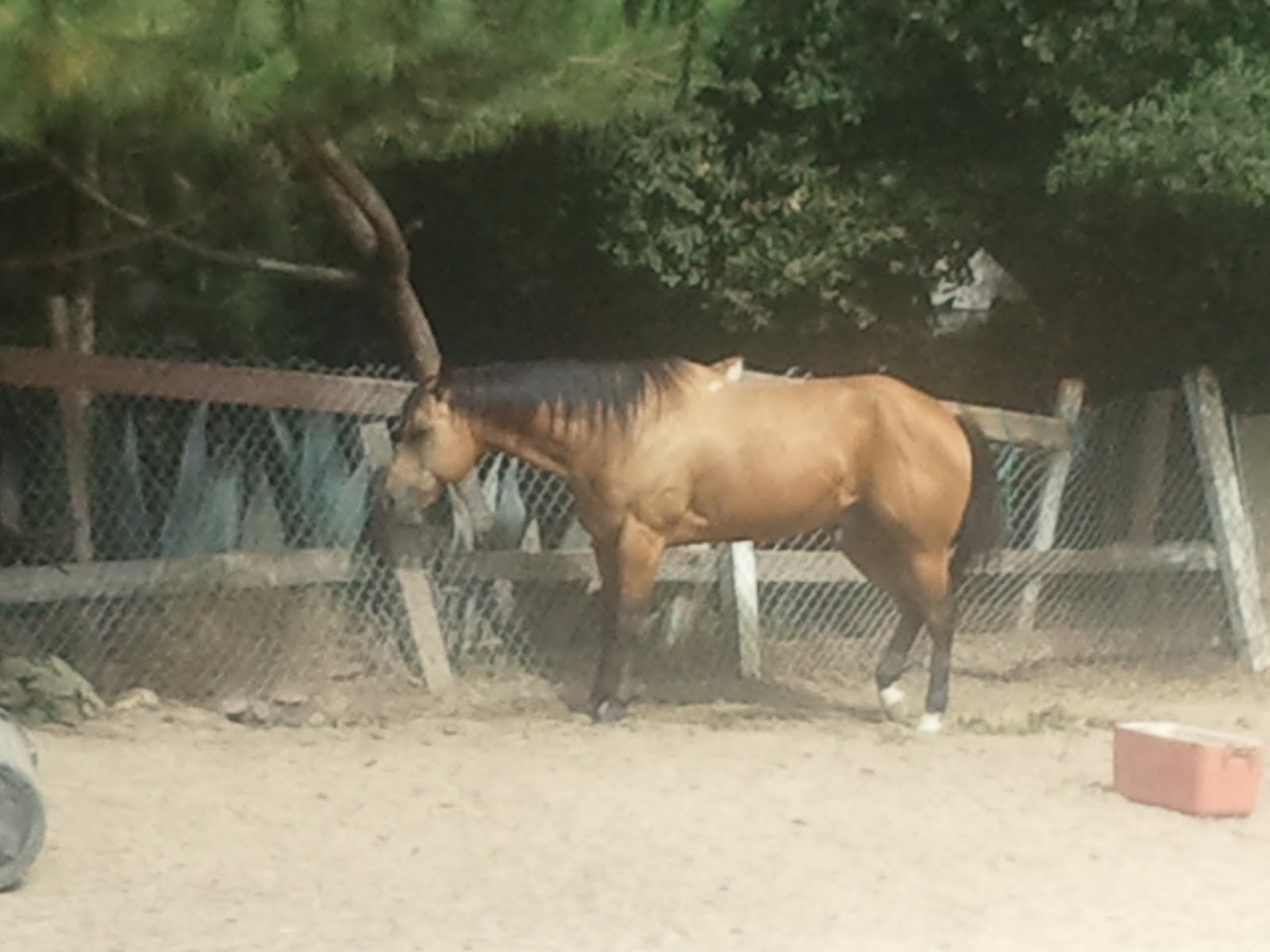
For a horse lover like me, I jump at the chance to ride whenever I can, so we took off on our trusted steeds, him on Maya, me on Lobo (seen here) for what I thought would be an hour ride from the Altadena Crest Trail to the Loma Alta Equestrian Arena.

But you can't stop horse people when they are having a great ride on a beautiful summer's afternoon. Before I knew it, I was agreeing to ride all the way down to the Rose Bowl in Pasadena (a four hour round trip ride, I might add)!

And what a great ride it was! Entering the Hahamongna Basin eastside trail from Altadena Drive, we enjoyed a slow quiet ride through one of Pasadena's great urban nature corridors. The birds were singing, the air was fresh from a slight breeze and the Arroyo Seco was still full of water, unusual this late in the summer season. Except for the passing of an occasional walker and photographer, we had the trail all to ourselves.

Soon we were travelling through the Devil's Gate Bridge tunnel down the trail to the Central Arroyo. I especially loved riding this section - so natural and quiet with the unchannelized Arroyo Seco stream to our right, gurgling along.

Civilization in the form of Brookside golfers and Rose Bowl Loop bicyclists and joggers soon appeared as we turned onto Washington Blvd to Parkview towards the westside Arroyo Seco trail heading back northward.

This was my first time on the Central Arroyo Seco westside trail and what a delight! Most of this trail is shadowed by old age oak trees on one side with a bucolic view of Brookside Golf Course on the other. My unflappable horse, who calmly walked down city streets, past bicyclists, cars, and joggers, stopped and perked up his ears each time a golfer teed off and the 'whiff' sound filled the air.

I really loved being on the westside trail which brought us right next to the Arroyo Seco stream north of the golf course. In fact, we had to cross the stream, about ankle deep, to reconnect to the trail back into the Hahamongna and northward home. What fun!

Sir Winston Churchill once said that 'the outside of a horse is good for the inside of a man' (or woman!) and this adage was no more true than while on this ride along the Arroyo Seco.  It's incredible that it's possible to ride (or walk!) streamside in an urbanized area of Southern California....yet feel totally in nature.

I can't wait to continue my horseback riding adventures along the Arroyo Seco and look forward to future trips both northward into the Angeles National Forest and southward into the Lower Arroyo Seco and South Pasadena Nature Parks.

Monday, August 1, 2011

The Pasadena Open Space & Conservation Element Update Points to a Sustainable Future

While local activists debate sediment removal in the Hahamongna at tonight's City Council meeting, another meeting will be taking place with a Pasadena City-appointed committee of citizens who have quietly been working for the past year and a half on the updating of the Open Space & Conservation Element to the City of Pasadena General Plan.

Under current State law, all California cities must periodically update their general plans, addressing such elements as housing, transportation, and health. The current committee has been working diligently with City staff and community stakeholders to both update the current Open Space & Conservation Element and integrate these general plan elements with the Green Space Element approved by the City in 2007 as well as the City's Green City Action Plan for sustainability (air quality, water quality/conservation and energy/greenhouse gas reductions).

After months of fact-finding, deliberation, community outreach meetings, walkabouts, and review of numerous plans and studies, the draft document for the Open Space & Conservation Element has been completed and will now be circulated to other City Commissions, including the Environmental Advisory Commission and the Recreation and Parks Commission, for review before reaching the Pasadena City Council for final approval.

The 63 page document, which can be accessed by clicking this blog's headline, provides a comprehensive overview of current City natural elements, conservation partners, sustainability issues, and urban nature needs within a framework to guide the City for future open space acquisitions and current open space stewardship. It was particularly gratifying to see in this report the extensive attention placed on the role that open space and conservation plays relative to water conservation and sustainable building practices.

The Open Space & Conservation Element Committee meets tonight at 6:45pm in the Grand Conference Room in the Basement of Pasadena City Hall. The meeting is open to the public and will be a fascinating update on a visionary future for Pasadena's urban nature culture with an eye towards an integrated approach to sustainability.
Enhanced by Zemanta

Tuesday, May 24, 2011

Jacarandas on Parade

Spring in Southern California truly arrives when the stately jacaranda trees come into full bloom.

This array of flower splendor is no more evident than along a mile long arbor on Del Mar Boulevard in Pasadena, California. Pasadena may be the 'Rose City,' but in May of each year, it arrays itself in purplish blue flowers.

A South American native tree purportedly first imported by early leaders of the Los Angeles Arboretum to test flowering trees that could adapt to Southern California's climate, the jacarandas are found throughout the Los Angeles area and provide welcome bursts of color that announce spring has arrived.

As a transplant to Southern California myself, I quickly developed a strong affinity for the jacaranda, since my favorite flower is the purple lilac, which does not grow well in this climate. Yet every spring I can count on two weeks of purple color bursts, thanks to the majestic jacaranda tree.

Yes, I know it's not a native tree. Yes, I know that its flowers create a big mess when they drop.

But I don't care because more than any other plant or tree, the jacaranda truly announces that spring has arrived. And to see them at their best, there is no better place than along Del Mar Boulevard between Lake Avenue and the Arroyo Seco Parkway. Not a Pasadenan? Hop on the Gold Line, get off at the Del Mar station, and walk/bicycle a few short blocks to see these beauties. Hurry...take that stroll or drive before the flower show is over.

Monday, May 9, 2011

The Real Hahamongna Dilemma

At first glance, you may think this photo is the Arroyo Seco flowing through the Hahamongna.

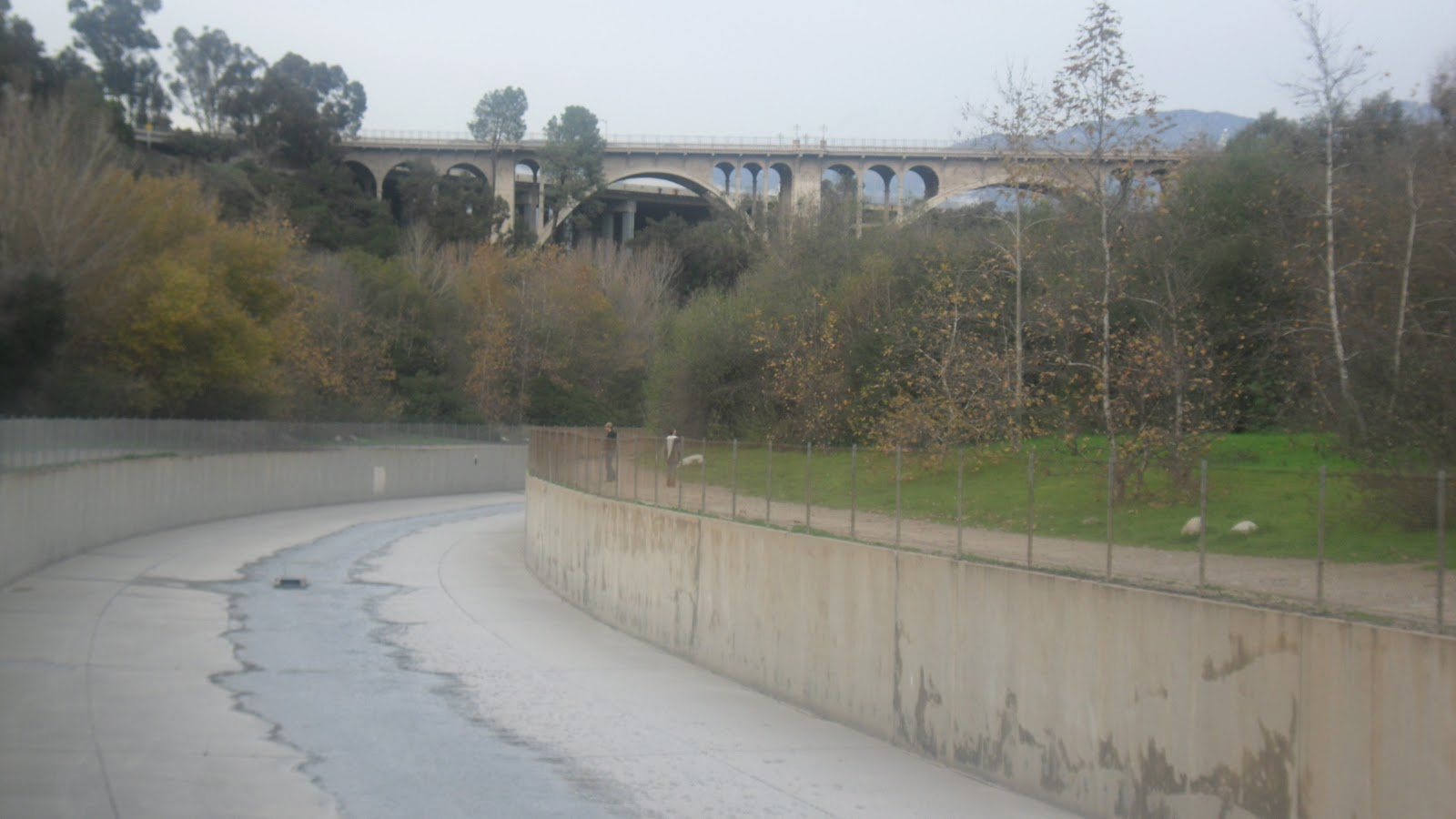
But this is actually the Arroyo Seco flowing south of Devil's Gate Dam just above Brookside Golf Course and look at that sediment!

One of the saddest legacies of the devastating 2009 Station Fire is that the complete burn of the upper Arroyo Seco Watershed created massive sediment debris flows into the central and lower reaches.

While lots of public outcry is being played out in the media about LA County's plan to remove sediment in the Hahamonga and the impact of that operation on habitat in that basin, no one is talking about what will happen downstream if the dam fails due to sediment buildup overload.

Already, heavy sediment flows into the Central Arroyo Seco have damaged most river restoration enhancements completed in 2008, including complete mortality for the small, yet growing school of native Arroyo Chub fish that was successfully reintroduced. In fact, the backwater pool under the Colorado Street Bridge is so full of sediment, you wouldn't even know that a pool once existed there.

In addition to the habitat damage, the sediment buildup both above and below the Rose Bowl complex is such that, without sediment removal behind the Dam, this popular recreation area could experience a flood or near flood event within the next year or so if rainy seasons replicate last year's deluge. Moreover, LA County's effort to relieve stress on Devil's Gate Dam from sediment buildup has included extra water releases into the Central Arroyo, contributing to the sediment buildup there.

This flooding potentiality was driven home last week during a tour by flood program representatives of the California Department of Water Resources who expressed shock (their actual word) at the level of sediment buildup behind the dam and its growing buildup in the Central Arroyo, especially as it 'backs up' into the channelized area just before the softbed section south of the Parking Lot I picnic area.

What would it mean to Pasadenans and their neighbors if the Brookside Golf Course and the Rose Bowl areas flooded?

First, it would mean no access to highly used recreational amenities, including the Rose Bowl Loop, which draw almost 3,000,0000 people to Brookside Park every year. Secondly, it would mean a major financial and logistics emergency preparedness cleanup effort by the City of Pasadena and LA County which would cost in the tens of thousands of dollars at a time of stressed public agency funding. Finally, it would mean a direct loss of over $4,000,000 in annual revenues that the City of Pasadena relies upon to fund its operating budget.

Here are some sobering facts:

.the 1938 Arroyo Seco flood damaged 85% of Brookside Golf Course and filled the Rose Bowl to its first tier level of seating until the river changed course and spared further damage to the stadium
.the Arroyo Seco Concrete Channel is nearing the end of its useful life
.the lack of federal funding match to complete the US Army Corps of Engineers Arroyo Seco Feasibility Study, first approved in 2003, hampers federal financial support for channel realignment or relocation in the Central Arroyo
.there is a high risk of little federal support in the event of a flood event in Brookside Park because, in part, the Federal Emergency Management Agency (FEMA) never created a flood inundation map for the area after the Arroyo Seco was channelized
.the Arroyo Seco Concrete Channel has never really been challenged with the type of heavy water/sediment flow now possible, so it is unknown whether it will actually 'hold' should a catastrophic spring flood event like the current Ohio and Mississippi River flooding test its strength

Let's hope that the newly created Sediment Removal Advisory Commitee will work with LA County Flood Control Management District leadership, state agencies, and federal officials to find sustainable solutions to Arroyo Seco sediment buildup that takes into account the larger context of impact that goes beyond the mere perimeter of the Hahamongna Basin.

Saturday, February 19, 2011

Arroyo Property of the Week - REAL Lofts in Pasadena

When people think of lofts, they generally think of transit-oriented projects or Downtown Los Angeles pied a terres.

But the Eastside of Pasadena has been home to a terrific real loft community since 1992 when an innovative entrepreneur (way before lofts were hot stuff) stumbled upon a sad, badly bruised cluster of warehouses that even the bank did not want to own.

With vision and cooperation from the City of Pasadena, the Studios at Walnut became the first project of 13 units allocated by the City for live/work lofts.

Today, the Studios sit at the juncture of the growing renaissance of East Pasadena. Just a couple blocks from the Gold Line Station and Colorado Boulevard, the Studios boast a terrific walkability score of 72 and amazing bicycle commuting mobility.

This enclave of artists and creative professionals allows both privacy and community in one of the true urban settings in Pasadena.

Designed as rental units (yes, that's right, you don't need to buy one to live here), the Studios are almost always fully leased.

So that's why the current availability of two units for rent present such a terrific opportunity for the artistically minded, especially with the new home of the Noises Within Theatre Company Complex just a few blocks away.

Don't miss this rare chance to experience real loft living in Pasadena.  Find out more at info@studiosatwalnut.com or 626-578-1696.

Saturday, February 5, 2011

Arroyo Property of the Week - Open Super Bowl Sunday

No other property lifestyle symbolizes Arroyo Culture more than the quintessential Bungalow Courtyard.

Now, a rare opportunity to own one of these adorable bungalows in Pasadena has arrived, blending the best of history recognized by a National Register of Historic Places Designation with the finest in modern amenities.

This new-to-the-market charmer was designed by renowned architect Cyril Bennett, AIA, circa 1915, during the era of the California Arts & Crafts Movement.

Totally restored, refreshed and updated with a modern kitchen and bath, 291 N. Garfield Avenue, Pasadena, is a two bedroom, one bath bungalow of 792 square feet on a 1792 square foot lot, with private back patio.

Listed at an affordable $344,500 (not a misprint!), this cozy retreat boasts an amazing 92 walkability score due to its proximity to Pasadena City Hall, the Central Library, Paseo Colorado and Old Pasadena. Ditch your car (although you can rent a monthly parking space behind the bungalows for $80 a month) and bicycle through one of California's prettiest cities the way that Albert Einstein once did. Pasadena's terrific bicycle culture means convenient bike racks and bicycle access to the nearby Memorial Park Gold Line Rail Station, whisking you to Downtown Los Angeles and other work and play destinations.


Can't wait to see this gem? No need to worry!

Stop by its first public viewing on Sunday, February 6th from 12 noon to 3:00pm. I'll be there to show this darling home to you. Yes, it's Super Bowl Sunday, so you can both house shop, then stroll down to the YardHouse in Paseo Colorado to watch the game at 3:30pm.

291 N. Garfield is the perfect place for a sustainable lifestyle: historical details+modern amenities+walkability+affordability in highly desirable Pasadena. Stop by and see for yourself!

Monday, January 10, 2011

Who Needs an Alarm Clock in Pasadena?

Who needs an alarm clock in Pasadena with wild parrots visiting in the early morning hours? Yes, they swooped down onto my neighbor's tree at 7:00am this morning in full grandeur. So much for my beauty sleep!

If you don't live in the Pasadena-Altadena-South Pasadena-Sierra Madre areas, you probably don't know that residents here have a natural alarm clock. The Parrots of Pasadena. as they are generally called, are a flock of hundreds of feral parrots, who migrate along the Arroyo Seco corridor in search of food and adventure. The Parrots are so notorious that they are even mentioned on the City of Pasadena's Wikipedia page as local icons!

According to the Los Angeles Parrot Project (http://www.californiaparrotproject.org/), there are at least five species represented in the flock, although the red lored Amazon Parrot seems to be the most common.  Many theories abound as to how this large flock has come to circle the city on a regular basis. Some say they were brought to the area years ago from Mexico and set loose; the most popular explanation suggests they were set free for their own survival from a large pet emporium on East Colorado Boulevard when the building caught on fire in 1959.

Regardless of their origin, the Parrots of Pasadena are a common sight - welcomed by some as 'local color' - hated by others as a nuisance.

In case you've never seen them in action, take a look and a listen here:


Enhanced by Zemanta

Monday, January 3, 2011

Trouble at the Lower Arroyo Seco Corral

The 'new business' item on the January 4, 2011, agenda of the Pasadena Recreation and Parks Commission looks simple enough: 'Reconfiguration of Trails and Introduction of Fencing in the Southern Archery Range Area of the Lower Arroyo Seco.'

Beneath the surface, though, conflict has been brewing between two groups - recreational hikers/runners/dog walkers and the Pasadena Roving Archers Club - who essentially want the same thing: better safety conditions that will stop hikers/runners/dog walkers from wandering into the active use archery range where bow and arrow aficionados have been taking target practice and hosting competitions since 1935.

The cause of this dispute? A recommendation by Pasadena City staff to erect split natural rail fencing on a temporary basis to establish two separate areas within the archery area of the always popular Lower Arroyo Seco Nature Park.

To understand the current seemingly hikers/runners/dog walkers vs archers situation, it's necessary to start with the Lower Arroyo Seco Master Plan, which was adopted in 2003 by the Pasadena City Council. That plan includes provisions to address potential conflicts between archery and other uses by calling for improvements to signage, trails, shooting lanes and habitat restoration.

In 2005, a new hiking trail was established between the archery range and the multi-use trail immediately adjacent to the channelized Arroyo Seco stream. Per the City's staff report, boulders, native plantings, and natural wooden posts were used to delineate the new trail and discourage trail users from leaving the new path.

But here's the rub: many hikers/runners/dog walkers still continue to use the OLD 'abandoned' trail segments, which traverses the archery shooting line. Obviously, everyone is concerned about human (and hopefully dog) safety with pedestrians in that area during archery events.

To provide a temporary solution because it does not currently have the funding necessary to complete its original trail plan, the City is proposing the construction of fencing that will divide the archery area into two sections: Targets 1 through 14, which will be dedicated solely to archery on a full-time basis, and Targets 15-28 which will be used for archery only on designated days and by special permit. The City will also construct temporary signage.

It appears that the archers are not too happy with the City's plan, judging by their website and Facebook postings.  They are concerned that a new requirement to obtain permits for archery events, coupled with reduce usage on Targets 15-28 will negatively impact their long-standing archery program (see my blog of December 27th on the popularity of Lower Arroyo Seco Nature Park).

Some hikers/runners/dog walkers, on the other hand, either mistakenly take the old trail or do so intentionally because they 'like this hike better' than the new trail segment. My personal observation is that there is not nearly enough signage to alert hikers/runners/dog walkers of the archery range's location and possible imminent danger.  Since so many hikers/runners/dog walkers traverse the Lower Arroyo Seco from connecting trails, it is possible that they are not aware of archery activity without such signage. (Thankfully, no hikers or dogs have been injured by arrows yet but that risk is always apparent.)

Can hikers/runners/dog walkers and archers get along in an area where the classic film, The Adventures of Robin Hood with Errol Flynn was filmed? Will temporary fencing really solve this safety issue? And what about the dogs that run around off-leash in that area, even though their owners should know better? Will the dogs understand to stop at the fencing? If you use the Lower Arroyo Seco Nature Park as part of your outdoor recreation/nature activities, you might want to voice your opinion at the January 4th R&P meeting, starting at 6:00pm at the Pasadena Senior Center.

Saturday, January 1, 2011

Here's to a Happy New Year Along the Arroyo Seco

As we enter a new year and a new decade, I want to take a moment to focus on why I write this blog: to teach us all how to love, respect and restore our fresh river waterways.

Since the 97th Rose Bowl Game is being played today, it seems appropriate to spend a moment talking about the historic Arroyo Seco whose waters flow through Brookside Golf Course and just to the west of the 'granddaddy of them all' football stadium.  Pictures speak louder than words, so here's the video I produced and directed which showcases the important urban river restoration work that the City of Pasadena and Arroyo Seco Foundation project team completed along the Arroyo Seco in 2008. The next time you visit the Rose Bowl/Brookside Park, take a walk along the Arroyo just south of Parking Lot I and discover nature in the city.

Our work is never done, so please make one of your New Year's Resolutions the commitment to come join us for the 22nd Great River Cleanup on Saturday, April 30, 2011. Details here: http://folar.org/?page_id=5

Enjoy...and may all your dreams come true!


Enhanced by Zemanta

Monday, December 27, 2010

Archers & Casters & Horses....Oh My!

It was the day after Christmas and I was expecting a crowd and parking challenges...but not at the Lower Arroyo Seco Nature Park in Pasadena!

Maybe it was the week of rain; maybe it was the desire to walk off Christmas dinner; maybe it was the Rose Bowl/Parade visitors; regardless, the Lower Arroyo was so busy with walkers, dogs, fly fishermen and equestrians that it was almost impossible to find parking in the park's lot!


Though this bucolic spot is a favorite with joggers and dog walkers, the Lower Arroyo, as we fondly call it, is also the home to some of Pasadena's oldest outdoor recreation groups.


First, there are the Pasadena Roving Archers (PRA), "dedicated to the art of the bow and arrow in the Lower Arroyo Seco since 1935." Men, women, young adults and children are all members of this long-standing non-profit group. All are bound together by the sport of archery, or the bow and arrow, my dad would call it. PRA is home to beginners, weekend enthusiasts, regional, state and international archers.

Did you know archery in the Arroyo Seco has a long history with organized competition starting in the early nineteen thirties? The Pasadena Roving Archers has been a part of that history and is charged with operating and maintaining the Lower Arroyo's archery range.

PRA members provide hundreds of hours of volunteer service to maintain these facilities and provide archery instruction to archers from 8 to 80. All of the PRA archery instructors have been certified by the National Archery Association. Archery classes with the PRA are a good way to learn the sport and this club is always looking for new enthusiastic members. Check them out at http://www.rovingarchers.com/.

Another terrific group that has been calling the Lower Arroyo home since 1947 is the Pasadena Casting Club, where current and future fly fishermen can practice the scientific art of angling and casting. This Club, a charter member of the Federation of Fly Fishers, also supports fish, habitat and natural resource conservation. The park's large casting pond is the ideal spot for fishermen young and old to take casting lessons or just hang around and tell fish tales at the PCC Clubhouse. You can find out how to join this club at  www.pasadenacastingclub.org.

Curious how the Arroyo Seco would look and act if it was not covered in concrete? Look no further than the Lower Arroyo because, thanks to the City of Pasadena and BFI, a naturalized diversion of the stream wends its way through the area, reminding visitors of both the river's past and its hopeful future to once again flow free.

It appears that the Lower Arroyo is no longer a Pasadena Best-Kept Secret but that shouldn't stop you and your family from coming down for a little river fun in the city.

Friday, July 16, 2010

A Tale of Two Rivers ~ A Tale of Two Cities

It was a week of big decisions for the Los Angeles and Arroyo Seco Rivers.

First, the City of Los Angeles, which has encased its beautiful Los Angeles River in concrete for decades, received word from US EPA that the River and its tributaries have been declared 'traditionally navigable' waterways. This means both federal funds for restoration and revitalization under the Clean Water Act, as well as regulatory support to improving ecosystem and drinking water quality.

In contrast, the City of Pasadena, which has prided itself on its 'Arroyo Culture' and 'Arroyo Seco Master Plan,' saw its City Council refuse to reconsider its 7-year-old decision to construct new athletic fields in the sensitive Hahamongna riparian basin, groundwater source of drinking water to hundreds of thousands in the region and home to one of Southern California's most sensitive urban interface ecosystems. (In fairness, the Council did reject one of two proposed 'soccer' fields which would be located in a part of the Basin currently inundated as a small lake with ducks swimming in it.)

The irony? While Los Angeles continues to move forward in removing concrete and debris from the Los Angeles River, Pasadena moves forward with building an artificial turf athletic field and parking lot within its natural Arroyo Seco riverine corridor.

These actions beg the question: which city is truly more committed to natural resource sustainability and local water supply reliability?
Enhanced by Zemanta

Tuesday, July 6, 2010

An Open Letter to the Pasadena City Council on Hahamongna Athletic Fields

Dear Mr. Mayor and City Council Members:

Please support the Hahamongna Advisory Committee's request to reconsider current city plans to build an athletic field and parking lot in the Hahamonga Watershed Park.

As a resident and constituent, I am voicing support for this reconsideration in light of numerous changed conditions since the Council's initial approval of plans in 2003.

These include:

1. environmental, climate, and political factors that have negatively affected the security of our local water supply and water quality.

Pasadena's current heavy reliance on imported water at a time of protracted water shortage creates tremendous vulnerability for our City's ability to provide reliable domestic water for local businesses and residents. The recent Station Fire, which devastated the upper Arroyo Seco watershed, has caused increased run-off and groundwater toxins into this already vulnerable water basin. A healthy natural habitat is essential to supporting a clean local water supply, and the building of any new infrastructure, including those planned, will destroy key elements of one of Southern California's last remaining allevial canyons where five habitat zones intersect. The City's inability to provide for local long-term water storage, treatment, and distribution will have a wide ranging effect, including negative consequences for the City's very important tourism economic engine.

2. mobility barriers that make it difficult to reach the proposed fields.

The Hahamongna Watershed Park currently has access from a two-lane street which is already experiencing heavy traffic congestion. Further, the Park itself has narrow lanes for vehicular traffic. Because of the park's location and current natural/passive recreation atmosphere, it is not easily accessible by bicycle, walking, or bus/shuttle transit. This Council is already on record stating that there will be no new roads in the Hahamongna without direct Council approval. This means that in addition to the cost of building parking lots in the Hahamongna, which will both disturb rare and sensitive natural habitat as well as prevent vital groundwater percolation, it is highly likely that 'overflow' of cars and vans will end up creating their own 'roads' and parking on non-parking surfaces, as I have witnessed at other sports recreation complexes. As a soccer mom, I can personally attest to the amount of equipment, water, first aid, chairs, umbrellas and other 'entourage' materials that regularly are part of organized youth athletic activities. I fear that the end result of any field/parking lot construction will overburden already taxed mobility access and available surface parking.

3. lack of consistency between the Hahamongna Master Plan and Pasadena's Green City Action Plan.

Since City Council passed the Green City Action Plan in 2006, almost three years after the Hahamongna Master Plan was approved, there has been no formal effort to reconcile the Green City elements with the Hahamongna Plan. Given Pasadena's leadership within the US Conference of Mayors Climate Protection Agreement and the 2006 United Nations Green Cities Declaration and Urban Environmental Accords, any final plans for the Hahamongna, including but not limited to athletic fields, would be flawed without coordination and reconcilitation of differences between these two important initiatives of the City, which prides itself as a sustainable community.

Your vote on July 12th to support reconsideration of the current city plan for athletic field construction in the Hahamongna will give our community and city staff a full opportunity to review and weigh the merits of current plans in light of the critical factors set forth above.

Thank you very much for your serious reflection on this request for reconsideration of plans for Hahamongna athletic fields. I look forward to your affirmative vote to support the reconsideration process.

Sincerely,

Meredith McKenzie
The Arroyo Lover